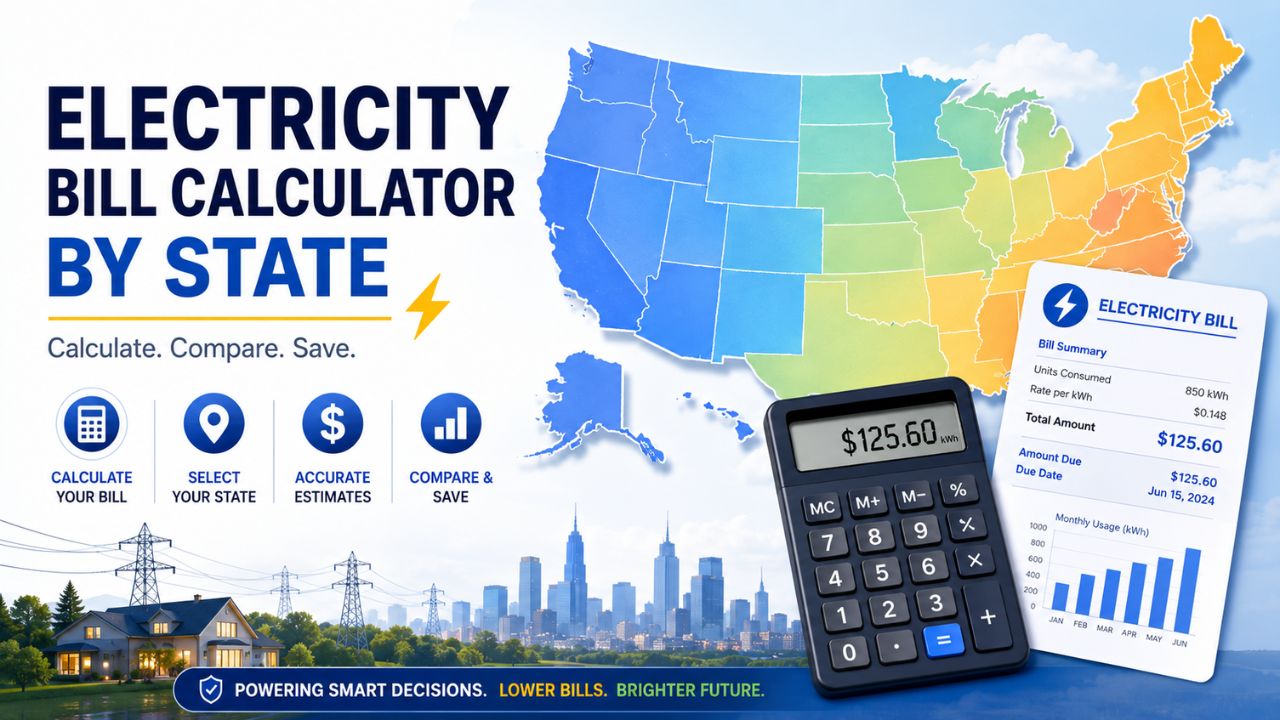
Electricity Bill Calculator by State
Estimate your monthly and annual electricity costs using average residential electricity rates for all 50 U.S. states. Compare your state’s power prices against the national average and better understand your household energy expenses.
Interactive Electricity Bill Calculator
Typical U.S. household usage ranges from 700–1,200 kWh per month.
Estimated Cost
Texas electricity rates are below the current U.S. national average residential rate.
Estimates only – actual bills vary by utility, plan, taxes, fees, weather, and usage tier.
About This Electricity Bill Calculator
This electricity bill calculator estimates residential power costs using average electricity rates by state as of May 2026. The calculator combines your estimated monthly electricity usage in kilowatt-hours (kWh) with average residential electricity prices collected from official energy datasets, including the U.S. Energy Information Administration (EIA) and other public utility reporting sources.
Electricity prices vary significantly across the United States due to fuel costs, grid infrastructure, utility regulations, renewable energy adoption, and seasonal demand. States such as Hawaii and California typically have some of the highest residential electricity rates, while states with lower generation and transmission costs often provide cheaper electricity.
This calculator is designed for educational and budgeting purposes only. Your actual electric bill may include taxes, delivery charges, fixed service fees, demand charges, time-of-use pricing, and tiered consumption rates that are not reflected in this estimate.
How to Use the Calculator
-
1
Select Your State
Choose your U.S. state from the dropdown menu to load the average residential electricity rate.
-
2
Enter Monthly Electricity Usage
Input your estimated monthly electricity consumption in kilowatt-hours (kWh). You can find this on your utility bill.
-
3
View Estimated Costs
Instantly see your estimated monthly and annual electricity costs, along with a comparison to the U.S. national average rate.
Frequently Asked Questions
What is the average electricity bill in the U.S. in 2026? ⌄
The average U.S. residential electricity bill in 2026 is typically between $130 and $180 per month depending on state electricity rates and household energy consumption.
Which states have the cheapest electricity rates? ⌄
States such as Utah, North Dakota, Idaho, Wyoming, and Nebraska often have some of the lowest residential electricity prices in the United States due to lower generation costs and local energy production.
Which states have the highest electricity costs? ⌄
Hawaii, California, Massachusetts, Connecticut, and New York generally have the highest residential electricity rates due to fuel costs, grid expenses, and energy policy factors.
How do I calculate my electric bill? ⌄
Multiply your monthly electricity usage in kWh by your utility’s electricity rate per kWh. For example, using 1,000 kWh at 16¢/kWh would result in an estimated bill of about $160 before taxes and fees.
What is a kilowatt-hour (kWh)? ⌄
A kilowatt-hour is a unit of energy usage. It represents using 1,000 watts of electricity for one hour. Utility companies use kWh to measure residential power consumption.
Why do electricity rates vary by state? ⌄
Electricity prices depend on fuel availability, grid infrastructure, local regulations, renewable energy investments, climate conditions, and utility operating costs.
Does this calculator include taxes and utility fees? ⌄
No. This calculator estimates energy supply costs only using average residential electricity rates. Your actual bill may include taxes, service charges, and delivery fees.
What uses the most electricity in a home? ⌄
Heating and cooling systems usually consume the most electricity, followed by water heaters, clothes dryers, refrigerators, and electric ovens.
How can I lower my electricity bill? ⌄
You can reduce electricity costs by improving insulation, using ENERGY STAR appliances, switching to LED lighting, adjusting thermostat settings, and reducing unnecessary power usage.