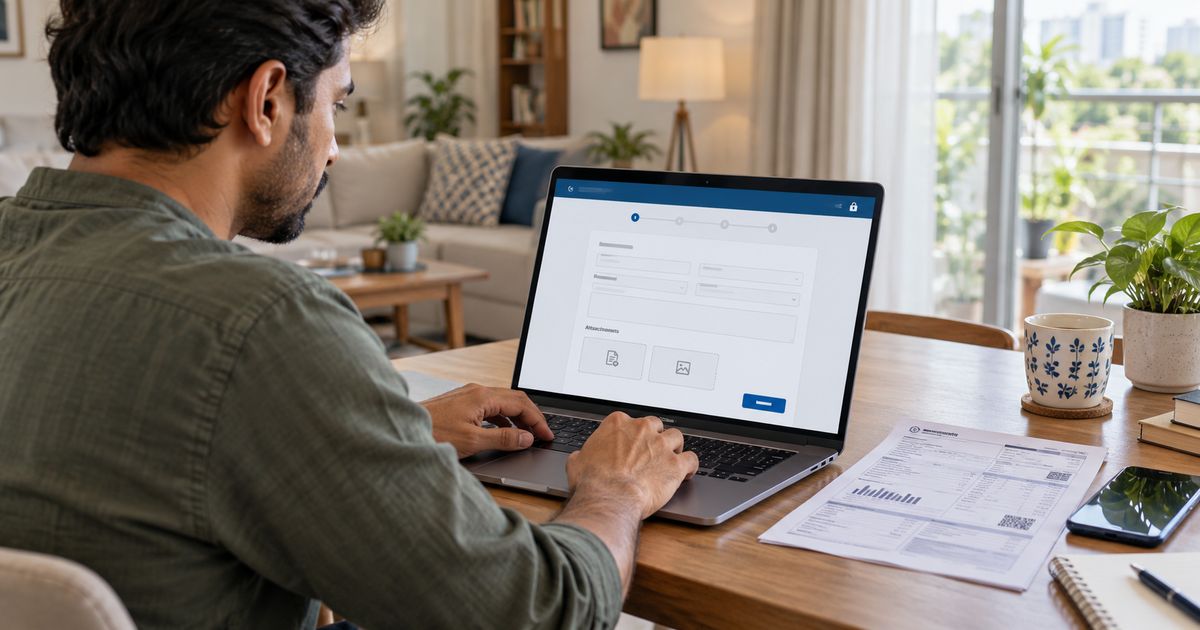
You can file an electricity bill complaint online through your electricity distribution company’s official website or mobile app. Choose a billing or meter-related issue, enter your consumer number, explain the disputed amount, upload supporting documents if requested, and save the complaint reference number.
If the company does not resolve the problem, your state has a formal grievance process. This guide explains how Indian consumers can identify the correct portal, write an effective complaint, and seek further review without exposing personal or payment information.
Electricity Bill Complaint Online: Step-by-Step Guide
Electricity supply in India is normally handled by a state distribution company, also called a DISCOM, or a licensed private distributor. Your bill identifies the provider and typically lists customer-care channels. Complaint links differ by location, so begin with the information on your actual statement instead of a random website.
The Ministry of Power’s Electricity (Rights of Consumers) framework addresses metering, billing, grievance handling, and related services. Specific online forms, timelines, and appeal rules are implemented through applicable state and utility procedures.
1. Confirm which company issued the bill
Read the provider’s name, consumer account number, billing period, and service address. A consumer in Delhi may have a different utility and complaint portal from a consumer in Uttar Pradesh or Tamil Nadu. Even within a state, different regions may use separate distribution companies.
Open the official provider website using its printed address or a government source. Look for sections labeled Customer Care, Register Complaint, Consumer Services, Bill Correction, or Grievance. Avoid sponsored websites that request OTPs or card details just to submit a complaint.
2. Identify the exact problem before filling out the form
Complaints are easier to handle when they identify one specific error. Common examples include a reading that does not match the meter, an estimated bill without a clear adjustment, a missing payment credit, a duplicate charge, an incorrect tariff category, or an unexplained arrears amount.
A large total is not enough by itself to show a billing mistake. Compare current and previous units, bill dates, and tariff components. If your usage increased, calculate average units per day; if it did not, highlight which charge changed. Our electricity bill calculator can help you create an estimate, but the official tariff remains authoritative.
3. Gather useful documents
Keep a PDF or photograph of the disputed bill and at least one earlier bill. If the problem relates to meter readings, include a dated photograph of the relevant display. For payment problems, include the receipt and transaction reference rather than a screenshot exposing an entire bank statement.
It is also helpful to record the consumer number, meter number, account category, billed units, complaint dates, and the precise amount you dispute. Keep original files in case the provider requests them later. Do not publish private consumer identifiers in public forums or social media comments.
4. Register the complaint on the official portal
- Open your provider’s verified website or app.
- Sign in using the approved consumer number, mobile verification, or account login.
- Choose the billing, meter, or payment complaint category that best fits the issue.
- Enter the bill month, amount, and a short factual explanation.
- Upload the requested bill, receipt, or meter photographs.
- Submit and save the reference or docket number.
For example, Uttar Pradesh Power Corporation’s consumer services include bill correction requests, meter complaints, and service-request status checks. Tamil Nadu’s official grievance guidance directs consumers to complaint channels and the Consumer Grievance Redressal Forum process. These are examples, not portals for all India.
5. Write a precise explanation rather than a long story
In the description, identify what the bill says, why you believe it is incorrect, and what review you want. Use dates and units. If the previous bill shows 180 units and the disputed statement shows 410 units for a similar period, say so and attach both records.
Do not claim that a meter is defective unless you have evidence. You can instead request a reading reconciliation or accuracy check. Avoid angry language and unsupported accusations; a clear sequence of events makes it easier for the utility to locate the relevant transaction and respond.
Example complaint wording
My electricity bill for the stated billing period shows 410 units. The previous comparable period showed 180 units. Please review the current and previous readings, billing dates, and any adjustment, and provide an itemized explanation or corrected bill if an error is found. I have attached both statements and a dated meter photograph.
Modify the figures to match your own documents. If the issue concerns payment, state the payment date, reference, amount, and whether it appears in the utility ledger. Request one specific outcome, such as a corrected entry or written breakdown.
6. Track the complaint and maintain a case file
After submission, note the complaint reference and the provider’s stated response process. Save confirmation messages and screenshots. Revisit the tracking page rather than creating several identical complaints, which can make the history harder to follow.
Keep a short record with the submission date, reference, documents uploaded, support replies, and next action. If a representative asks for more details, provide them through an official channel. If a case is marked resolved but the error remains, keep that closure message as part of your evidence.
7. Ask about payment obligations during a dispute
Submitting a complaint does not always suspend payment deadlines or disconnection procedures. Ask the utility whether you should pay an undisputed portion, whether any provisional arrangement applies, and which current regulation governs a disputed bill.
Do not ignore a due date because you are waiting for an online response. If disconnection is threatened, contact the official support channel promptly and document the conversation. Financial arrangements and protections vary by state and the type of complaint.
8. Request a meter inspection when readings remain inconsistent
If the dispute concerns unexplained consumption, you may ask the DISCOM about formal meter testing or verification. The Ministry of Power’s 2024 consumer-rights announcement discusses check meters in response to consumption complaints.
Ask what records, fees, and practical steps apply to your connection. Do not open the meter cover or attempt to test wiring yourself. An electrician can assess your household circuits, while the authorized utility handles the electricity meter.
9. Escalate unresolved cases through the proper route
If the utility does not address the grievance according to its applicable procedure, review the instructions for the Consumer Grievance Redressal Forum, often called the CGRF. An Electricity Ombudsman generally provides a further route according to the relevant state regulations.
The Haryana Electricity Regulatory Commission’s CGRF information explains the statutory grievance-forum arrangement. The Joint Electricity Regulatory Commission’s Ombudsman guidance illustrates why a prior forum petition, relevant documents, and a clear requested remedy may be required. Always check the rules for your state rather than copying another jurisdiction’s filing form.
Common mistakes that delay resolution
People sometimes send complaints to the wrong provider or select a power-cut category when their issue is a bill correction. Others upload a bank payment confirmation but no electricity account details, or provide the total bill without the specific charge they question.
Another common mistake is using the same description repeatedly across multiple complaint tickets. Begin with one clear request, track its reference, and add documents to the existing case when the system permits. Protect the original evidence, especially when a dispute spans several billing cycles.
How to tell whether the problem has really been fixed
Do not rely solely on a message saying the complaint is closed. Open the updated statement or transaction ledger and check whether the reading, units, tariff component, or payment credit actually changed. If the utility rejects your request, ask for the calculation and reason in writing.
Where a credit is promised, verify that it appears in the account and is reflected in the correct billing period. For prepaid service, inspect the wallet ledger separately from the energy-usage report. The amount recharged and the balance remaining are not the same thing.
Make future complaints easier to document
Save monthly bills and receipts in a folder organized by year. Take periodic dated meter photos when the display is safely accessible, and track average daily consumption. A simple record makes genuine billing errors easier to distinguish from seasonal appliance use or a longer billing cycle.
Check your provider’s official site for updated contact options whenever you need help. Complaint portals and department names can change, but a clear record of consumer number, billed units, payment history, and disputed item remains useful in nearly every case.
FAQs About Electricity Bill Complaints
Q. Can I file a complaint without visiting an electricity office?
A. Many DISCOMs provide online or app-based complaint channels. Check your provider’s official website to see which options apply to your account.
Q. Does filing a complaint automatically correct the bill?
A. No. The provider must review the records and determine whether a correction is justified.
Q. What if the complaint portal does not work?
A. Use the provider’s verified helpline or customer service office, and preserve evidence of your attempts to submit the issue.
Q. Can I approach the Electricity Ombudsman immediately?
A. Follow the grievance stages required by your regulator. Many procedures require first approaching the provider or CGRF.
Conclusion
A successful electricity bill complaint online begins with the correct provider, clear evidence, and one specific request. Save your complaint reference, monitor the response, and use the regulator’s grievance process when necessary.
Disclaimer
This article offers general consumer information for India, not legal advice. Local DISCOM procedures, tariff orders, payment rules, and escalation requirements vary. Verify your rights and deadlines through current official sources.