⚡ Power Consumption Calculator
💡 Frequently Asked Questions
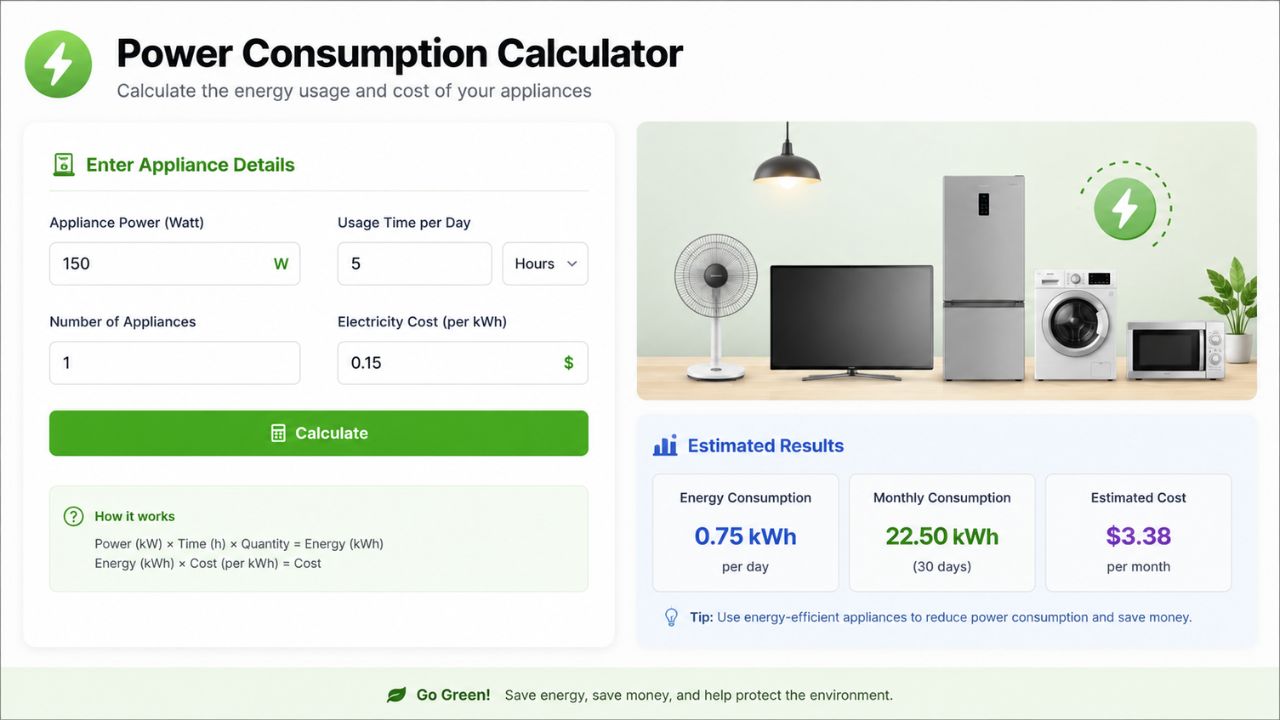
The calculator multiplies your appliance’s wattage by the number of hours used per day to find total Watt-hours ($Wh$). This is divided by 1,000 to convert it into Kilowatt-hours ($kWh$), which is then multiplied by your local utility rate to calculate costs.
Look for a metal stamp, sticker, or printed label on the back or bottom of the device. It will list a number followed by a “W” (e.g., 120W). If it only lists Volts and Amps, multiply them together ($V \times A = W$) to find the wattage.
A Kilowatt-hour (kWh) is the standard unit of measurement used by utility companies to bill your electricity consumption. It represents using 1,000 watts of electricity continuously for one hour.
Electricity tariff rates fluctuate heavily depending on geographic location, local infrastructure, taxes, and energy sources used in that specific region.
Heating and cooling systems (HVAC), electric water heaters, clothes dryers, and refrigerators are traditionally the largest contributors to residential electricity bills.
No, this calculates active runtime usage. “Phantom load” or standby power (devices drawing power while turned off but plugged in) can add an extra 5-10% to household usage and should be calculated separately.
These figures are baseline estimates using average regional baseline rates. Your actual bill might differ slightly based on tiered pricing structures, time-of-use rates, or seasonal adjustments.
Switching to LED light bulbs, utilizing smart power strips to cut standby power, upgrading to Energy Star appliances, and adjusting your thermostat by a few degrees can make a noticeable difference.
Watts measures the instantaneous rate of electrical power power a device demands to function. Watt-hours measures the total accumulated energy consumed over a period of time.
Generally, yes. Due to mechanical wear and tear, older technology, and less rigorous environmental efficiency guidelines, legacy appliances usually draw significantly more power than modern eco-certified alternatives.