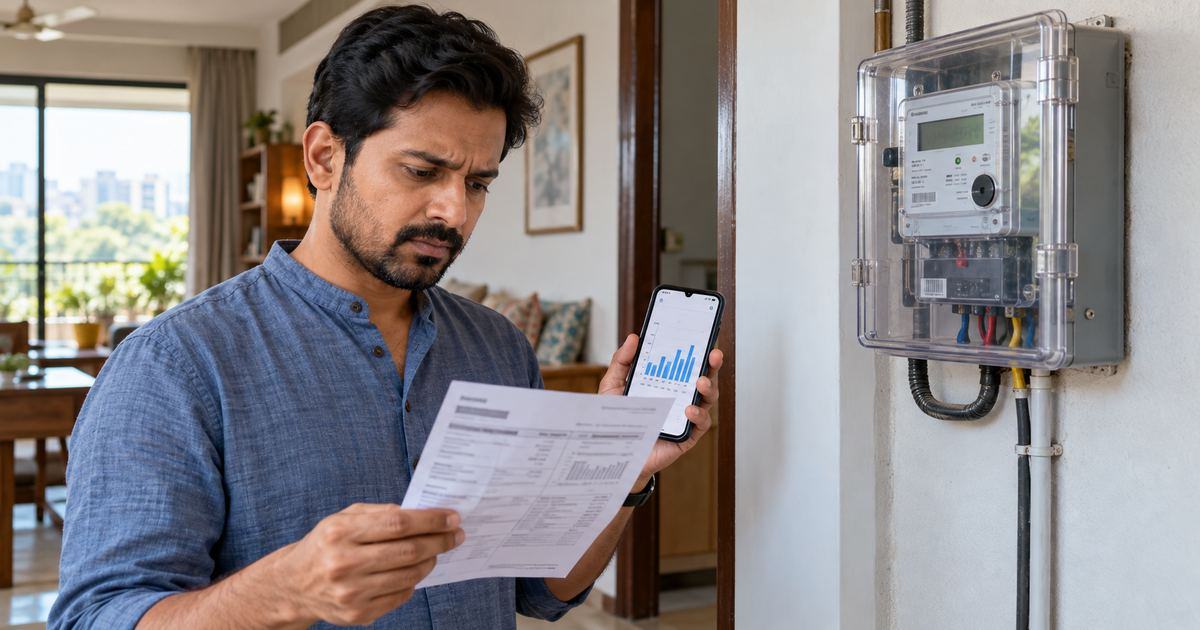
A smart meter high bill does not automatically mean the meter is faulty. Higher appliance use, a longer billing period, tariff components, past dues, or a correction to earlier estimated readings can all raise the amount you pay. The first step is to compare electricity units with the charges on your account, rather than judging the total alone.
This guide explains how to read the difference, investigate unusual consumption, and raise an evidence-based complaint with your electricity distribution company (DISCOM) in India.
Smart Meter High Bill: Main Reasons and Checks
A smart meter measures electricity use and can send readings to the utility through a communication network. Unlike an old meter that needs frequent manual reading, many smart meters also offer daily usage information through a utility app or portal. A useful starting point is the National Smart Grid Mission’s explanation of consumer energy tracking.
The technology can make usage easier to review, but the amount charged still depends on the applicable tariff, your connection category, billing rules, and actual consumption. Therefore, separate two questions: did your home use more units, and did the utility charge more per unit or add other amounts?
1. Compare units before comparing rupee totals
Open the latest statement or prepaid usage history. Record the billing dates, opening and closing readings where supplied, billed units, energy charge, fixed charge, duty, adjustment, and any arrears. Compare those items with an earlier period of similar length, preferably in the same season.
If the unit count has risen sharply, investigate appliances, cooling needs, and the reading record. If units are steady but the payable amount is higher, investigate tariffs and separate charges first. A bill can increase even when your household’s electricity use has not changed much.
2. Cooling, heating, and pump use may have changed
Air conditioners, room heaters, water heaters, and water pumps can noticeably change a household’s daily energy use. An appliance used for extra hours in hot or cold weather may cost more even when no new device has been purchased. A malfunctioning appliance may also cycle for longer than before.
Look at daily or hourly consumption, if your DISCOM provides it. Compare a high-use day with a typical day and note when the AC, geyser, or pump was running. Avoid guessing from the number of appliances alone: power ratings and operating hours matter more.
3. The billing period may contain more days
A bill covering 38 days naturally includes more usage than one covering 29 days when average daily consumption is similar. Check the actual start and end dates before comparing two totals. Bi-monthly billing and unusual meter-reading cycles can make a monthly comparison misleading.
For a fair comparison, divide the total units by the number of days in each period. If an earlier period had 210 units over 30 days, the daily average was 7 units. If the current period has 266 units over 38 days, the daily average is also 7 units. The higher total does not demonstrate a consumption spike.
4. Estimated readings or a meter change may need reconciliation
If a prior bill used an estimated reading, a later bill may correct the estimate against actual meter data. That catch-up can look like an unexpected increase. Meter replacement can also create questions if the old meter’s final reading or the new meter’s starting reading was recorded incorrectly.
Look for entries such as estimated consumption, previous adjustment, opening balance, or meter exchange. Ask the DISCOM for the old and new meter records when a change happened near the disputed dates. Do not assume the entire correction is wrong, but request a clear unit-by-unit explanation.
5. Tariffs and non-energy charges also matter
Electricity bills may include an energy charge, fixed or demand-related charges, electricity duty, fuel or power-purchase adjustments, and other approved amounts. Which items apply depends on the state, DISCOM, tariff order, and consumer category. Commercial rates and domestic rates can be very different.
Even a small rate change can affect the payable total. Check the current tariff schedule on your DISCOM’s official website and the relevant state electricity regulatory commission’s order. A general electricity cost calculator is useful for estimates, but the official tariff and meter data control the bill.
6. Old dues or security-deposit adjustments may appear
An overdue amount, installment, corrected subsidy, or other account adjustment can increase a payment demand without increasing this month’s units. On a prepaid connection, the app may show deductions or a balance change that includes something other than fresh energy usage.
Read the transaction or ledger details. Record each deduction’s date, description, and amount. If the app groups charges into one line, request the itemized ledger from your DISCOM rather than assuming every rupee represents electricity consumed that day.
7. Smart prepaid and postpaid accounts display costs differently
A postpaid connection generally bills for a completed period. A prepaid account uses an advance balance and may show smaller recurring deductions as consumption and other applicable charges are posted. The display can make ordinary charges feel more frequent, especially when you are used to a single monthly bill.
The Ministry of Power’s smart prepaid meter guidance describes consumption tracking, recharge alerts, and mechanisms for dealing with older arrears. These are features of the rollout, not proof that each DISCOM uses identical deduction methods.
A simple example of consumption versus charges
Suppose a household uses 240 units in a 30-day period. That is 8 units a day. In the next 30-day period, the household uses 300 units, or 10 units a day. Consumption increased by 60 units, which is 25% more than before. A longer-running AC or pump might explain that change.
Now imagine the usage stays at 240 units, but the account displays a separate ₹300 past-due adjustment. The total payable rises, yet the home’s units have not increased. These figures are examples, not a claim about any particular state’s rates. You can explore a rough charge estimate with the site’s electricity bill calculator, then confirm the result against the official tariff.
How to investigate a high bill in seven steps
- Save evidence. Download the present and previous two or three bills, transaction history, and consumption charts. Keep screenshots showing dates.
- Confirm account details. Check consumer number, connection category, sanctioned load, meter number, and billing period.
- Check usage. Compare total units and daily averages. On prepaid accounts, compare the consumption log with the balance ledger.
- Check readings. Where available, compare the meter’s cumulative kWh value with readings shown by the utility. Note that the display may cycle through multiple registers.
- List all other charges. Identify fixed charges, duty, late fees, adjustments, and old dues separately.
- Review major appliances. Compare operating hours of the AC, geyser, refrigerator, and water pump with earlier weeks. Do not open a sealed meter or tamper with wiring.
- Ask for a breakdown. If the difference remains unexplained, submit a written billing complaint and keep the reference number.
Make one comparison sheet with the billing dates, units, average daily units, total charges, and the exact amount disputed. This will be much more useful to the customer-service team than simply saying the bill seems too high.
When should you request a meter accuracy check?
If the meter shows substantial use while the premises is vacant, readings do not reconcile, or a clear billing error persists after review, ask the DISCOM for formal meter testing or verification. The complaint process and any applicable testing fee depend on local regulations. A licensed electrician can separately check household wiring and appliance faults.
India’s 2024 amendments to the Electricity (Rights of Consumers) Rules address check meters for consumption-verification complaints. Refer to your DISCOM’s current process before assuming a specific installation or resolution timeline.
What to include in a written complaint
Provide the consumer number, meter number, disputed period, billed units, earlier comparable readings, relevant payment references, and a short explanation of the discrepancy. Attach your bills and screenshots. Ask whether the amount came from actual consumption, a tariff component, an estimated-reading correction, or a carried-forward balance.
Request a written response and the complaint tracking number. If the response is unsatisfactory, follow the DISCOM’s published grievance path and the relevant Consumer Grievance Redressal Forum and Electricity Ombudsman procedures. They vary by state and type of issue.
How to avoid future bill surprises
Check your usage at the same time each week. Watch average units per day rather than only the recharge balance or bill total. If your utility offers alerts, turn them on, and keep copies of meter-change documents and past bills.
Make gradual changes to high-use appliances and see whether the usage chart responds. Keep the house safe: never remove the meter cover or disconnect wiring to investigate a charge. Start with records, then use the utility’s complaint process or a qualified electrician where necessary.
FAQs About a Smart Meter High Bill
Q. Does a smart meter automatically increase electricity consumption?
A. No. A smart meter measures consumption; it does not inherently make appliances use more electricity. A billing correction or a change in how usage is displayed can change what you notice.
Q. Can I dispute a high bill after paying it?
A. You can ask your DISCOM to review a billing discrepancy. Refunds, adjustments, and deadlines depend on the applicable rules, so keep payment proof and file your complaint promptly.
Q. Why is a prepaid balance falling when I’m not home?
A. Refrigerators and standby devices may still consume power. Account deductions can also include non-energy charges or adjustments. Compare your consumption log and balance ledger.
Q. Should I stop paying while a complaint is pending?
A. Do not assume a complaint automatically suspends payment or disconnection rules. Ask the DISCOM about the disputed-bill procedure and any required undisputed payment.
Conclusion
A smart meter high bill is best investigated by checking units, billing dates, tariff components, and account adjustments one at a time. Save your evidence, estimate expected charges, and ask the DISCOM for formal verification when the difference cannot be explained.
Disclaimer
This article provides general educational information for electricity consumers in India. Rates, fees, meter settings, and dispute procedures vary by state and utility. Always check your latest DISCOM records and regulatory rules.