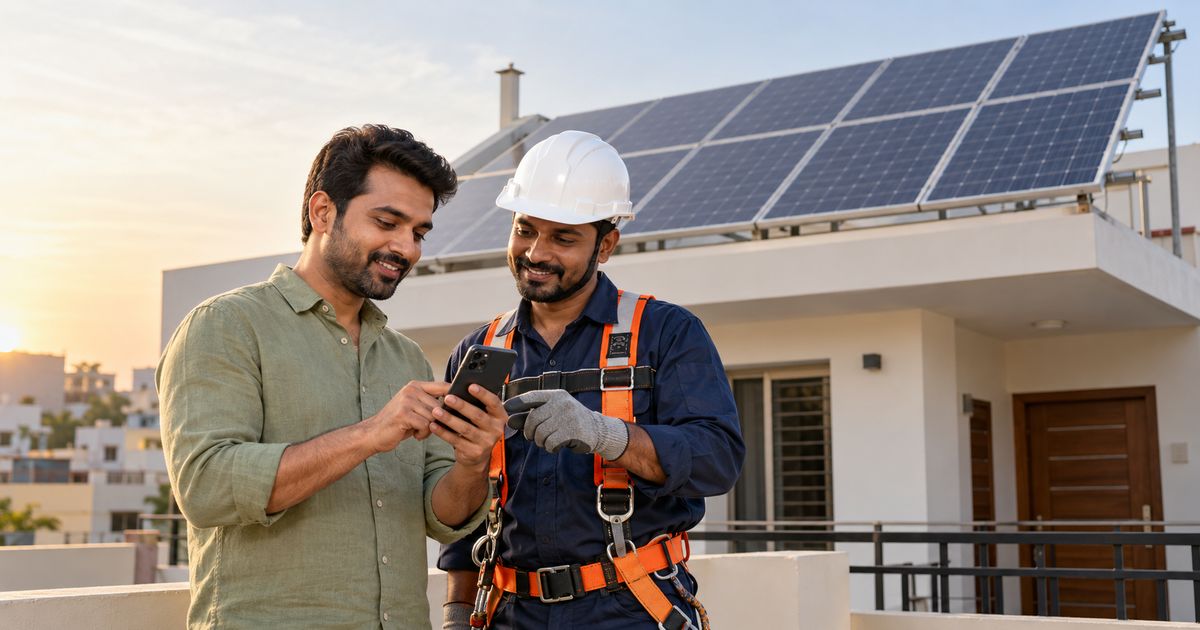
PM Surya Ghar Yojana 2026 helps eligible residential electricity consumers install grid-connected rooftop solar using a central financial assistance scheme. Applicants generally start through the government national portal, coordinate with their local electricity distribution company (DISCOM), choose an eligible installation route, and complete the required verification before any approved subsidy is released.
Subsidy amounts depend on the system capacity, location, eligible consumer category, and current scheme guidelines. Do not treat an old promotional chart as guaranteed. This guide explains the application process, solar billing basics, important checks, and how to avoid mistakes before committing money.
PM Surya Ghar Yojana 2026: Who Can Apply?
The Ministry of New and Renewable Energy (MNRE) operates PM Surya Ghar: Muft Bijli Yojana for residential rooftop solar. The scheme began in February 2024 and targets rooftop installations for one crore households. The March 2026 Ministry update describes a demand-driven programme for residential consumers who have a grid-connected electricity connection with the local DISCOM.
Eligibility also depends on the scheme’s operational conditions, documentation, installation type, and required approvals. A rented household, apartment resident, or consumer with shared roof rights should establish ownership or authorization and review the applicable rules before paying a vendor.
What is the scheme designed to achieve?
Solar panels generate electricity in sunlight. A grid-connected residential system may supply household appliances during the day and, under an approved metering arrangement, send unused electricity to the distribution network. This can reduce the number of electricity units purchased from the grid.
The programme aims to reduce household electricity costs and increase rooftop solar deployment. The frequently repeated phrase about ‘up to 300 units’ is not an unconditional monthly cash grant or a promise that every consumer will get a zero bill. The result depends on solar production, household demand, local tariff and settlement arrangements.
How much subsidy can a household receive?
The original national approval announced central support calculated using system capacity, with a cap for the main residential capacity band. In that original schedule, the examples were ₹30,000 for 1 kW, ₹60,000 for 2 kW, and ₹78,000 for 3 kW or more. These figures describe the 2024 launch framework rather than a guarantee for every application filed in 2026.
MNRE has since issued operational guidelines and amendments. Review the official 2025 guideline amendment, the national portal’s currently displayed eligible subsidy, and your DISCOM’s confirmation for the exact address. Special-category geography and separately offered state incentives can change the total support.
Does a larger system always earn more assistance?
No. A subsidy ceiling can apply beyond the supported capacity band, so installing more panels does not necessarily increase the central subsidy proportionately. The right plant size should be based on usable roof area, connection and load requirements, household electricity use, and permitted export rules.
Review at least 12 months of electricity units and your expected future demand. A system sized only to maximize subsidy may not be the right financial or technical choice. Ask the installer to explain expected yearly generation using local solar exposure and realistic losses.
Step 1: Confirm the electricity account and roof situation
Obtain the latest electricity bill and check the name, consumer account number, registered mobile details, and DISCOM. Confirm roof ownership or permission for installation. Apartments and multi-owner buildings may need additional consent and a different approved arrangement.
Inspect the roof’s condition with a qualified professional. Old waterproofing, shading from adjacent buildings, and structural concerns can affect installation feasibility. Installing panels on a roof due for major repairs can create additional future costs.
Step 2: Start on the official national portal
Use the government’s PM Surya Ghar national portal and follow its current application process. It typically requires state, electricity utility, consumer identifiers, and applicant contact information. Use only authentic government or DISCOM links.
Save your application number, mobile verification records, and copies of submitted data. Do not send OTPs or passwords to an installer or someone posing as a government agent. The website’s instructions may change as the scheme evolves, so use the portal’s live guidance rather than relying solely on screenshots in older articles.
Step 3: Understand DISCOM technical approvals
The local DISCOM may need to confirm connection eligibility, capacity limits, metering requirements, and technical feasibility before installation or commissioning. Requirements can vary by state and system size. Some procedures are streamlined but still depend on the applicable connection and safety rules.
Keep documentation of all approvals and rejection reasons. Do not assume a verbal promise from a vendor replaces official permission. Ask whether sanctioned load, meter replacement, or wiring modifications are required and who is responsible for their costs.
Step 4: Compare suitable vendors
Ask for a clear written quotation showing system capacity, module and inverter specifications, warranty terms, structural work, cabling, protection equipment, applicable taxes, service, and net-metering work. Confirm that the installation route and vendor meet the current scheme requirements.
Compare multiple proposals based on quality and after-sales support, not the lowest quoted price. Verify the vendor’s current status through the authorised portal where required. Do not pay deposits to personal accounts or accept a guarantee of a subsidy that has not been approved for your case.
Step 5: Complete installation and inspection
After the necessary approvals, the vendor installs the equipment and safety systems. The DISCOM and scheme process may require commissioning reports, photographs, technical documents, and meter-related verification. The installer should explain how to shut down the inverter safely and where emergency isolation equipment is located.
Do not try to connect a rooftop solar plant directly to household wiring yourself. Incorrect wiring can create electrical, fire, and back-feed risks. Installation and interconnection should be handled by qualified people following relevant standards and DISCOM requirements.
Step 6: Track subsidy release correctly
The programme’s financial assistance is subject to successful installation, verification, accurate bank details, and applicable submission rules. The exact sequence for claiming and receiving the central assistance should be taken from the current official portal and scheme documents.
Save the commissioning record, application status, approved subsidy figure, beneficiary details, and official acknowledgments. A vendor’s claimed disbursement date is not binding on the government. For unexplained delays, contact the official scheme help desk or the DISCOM indicated in your application.
How much electricity will rooftop solar produce?
A simple illustrative calculation for a 3 kW system is 3 kW × 4 equivalent full-sun hours per day × 30 days = 360 kWh of theoretical monthly generation before system losses. The actual AC electricity delivered can be lower due to temperature, shade, dust, inverter losses, downtime, and seasonal changes.
This is not a guaranteed monthly output for any address. Ask for a location-specific estimate using roof orientation and shade conditions. Production in the monsoon season may differ noticeably from production in clear, sunny months.
Why the household bill might not become zero
Rooftop solar offsets eligible electricity charges, but your connection may still have fixed, minimum, demand-related, duty, or other permitted items. You may also import electricity at night or during periods of poor sunshine. How exports are credited depends on the approved net metering or net billing rules.
The government’s rooftop solar FAQ explains that a zero total bill is uncommon because some minimum charges may remain. Use your actual import, export, and ledger readings rather than relying on an advertisement promising guaranteed free electricity.
Is there an obligation to buy batteries?
A typical grid-connected rooftop solar installation does not automatically require a household battery. A battery or backup-capable hybrid system may have different costs, eligibility implications, and technical approvals. Decide based on actual outage needs and permitted system design.
Ordinary grid-tied solar inverters generally stop exporting during a grid outage for safety, unless the system has a correctly designed and approved backup function. Do not assume panels will supply your appliances through a blackout merely because the sun is shining.
How to estimate financial savings
Compare the total installed price after confirmed subsidy and other expenses with the cost of electricity likely to be avoided over time. Use a realistic estimate of self-consumed solar units, credited exports, rising maintenance requirements, and the applicable DISCOM tariff.
For example, 200 units of grid purchases avoided at an illustrative effective ₹7 per unit is ₹1,400 of energy-cost reduction during that month. This does not mean every unit of solar generated is worth ₹7, because export credits and tariff slabs can differ. Check the electricity bill calculator only as a rough planning aid.
What should you verify before signing?
Confirm the system size, structural suitability, warranty, expected generation method, financial assistance eligibility, gross and net price, inspection requirements, ownership documents, and maintenance responsibilities. Ask what happens if the DISCOM rejects the proposed capacity or if a claimed subsidy is lower than expected.
Keep an itemized contract and proof of every payment. A reputable installer should be comfortable explaining limitations in writing, including what is not included in the quotation and who pays for future service visits.
FAQs About PM Surya Ghar Yojana 2026
Q. Can I apply if I live in a rented home?
A. Check the applicable scheme and property-consent requirements. Roof ownership or authorized installation permission may be necessary.
Q. Is the central subsidy available automatically on buying panels?
A. No. Eligibility, application, installation and verification requirements must be satisfied through the approved process.
Q. Will a 3 kW plant always produce 300 units per month?
A. No. Production depends on local sunshine, season, shading, orientation, and system losses.
Q. Can I receive both central and state-level incentives?
A. Some states offer additional support, but the combined eligibility rules and current amounts must be verified for your location.
Conclusion
PM Surya Ghar Yojana 2026 can reduce the cost of eligible household rooftop solar, but every applicant should verify current assistance, approval requirements, and realistic generation first. Start through the official portal and compare properly documented installation proposals.
Disclaimer
This is general educational information, not a guarantee of subsidy approval or financial savings. Government guidelines, state incentives, technical rules, and processing procedures can change. Official MNRE, national portal, and DISCOM instructions control.