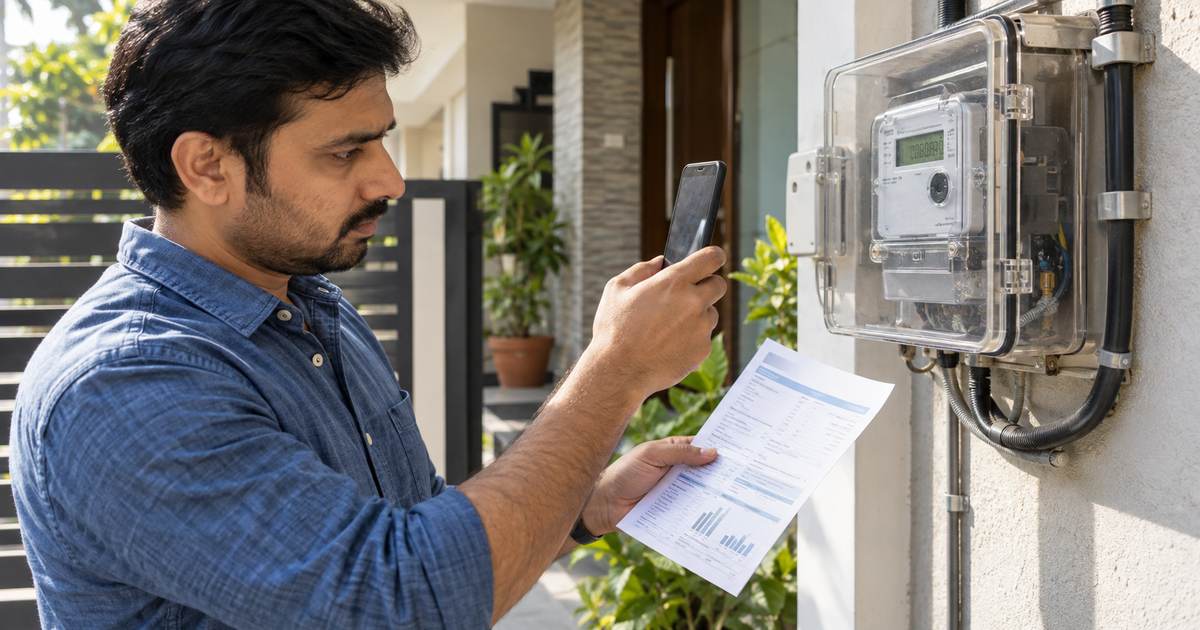
A wrong electricity meter reading can lead to a bill that is too high, too low, or inconsistent with the units you actually used. To request a correction, photograph the correct energy register, compare it with the readings and dates on the bill, and submit a documented bill-correction request to your electricity distribution company (DISCOM).
Not every large bill involves a reading error. This guide shows you how to calculate units, identify estimated or mismatched readings, and ask the utility to review the precise numbers that may be wrong.
Wrong Electricity Meter Reading: How to Check and Correct It
Electricity meters usually record cumulative consumption. That means the display shows units accumulated over time rather than the amount used in one month. A residential bill commonly calculates units from the difference between two relevant readings, subject to any meter multiplier, replacement, adjustment, or tariff-specific arrangement.
When checking the statement, make sure the account and meter numbers are yours and the relevant register is the one used for billing. A photograph of an unrelated display figure, such as voltage, will not prove the billed units are incorrect.
Start by checking the billing period
Locate the current and previous reading dates on your statement. A longer-than-usual period can raise the total units even if average daily consumption stays stable. The number of days is just as important as the two cumulative readings when you compare months.
For example, 270 units over 45 days equals 6 units per day. A bill of 180 units over 30 days also equals 6 units per day. Those totals are different, but the daily electricity use is the same. Check dates before concluding the meter was misread.
Find the right kWh register on the meter
On a typical domestic meter, kWh stands for kilowatt-hours. One kWh is one unit of electrical energy. A smart meter may cycle through many display screens, including current, voltage, maximum demand, time, and import or export energy readings.
Use the meter model’s instructions or your DISCOM’s guidance to identify the relevant energy register. For a rooftop solar connection or specialized tariff, the bill may use multiple registers. Do not subtract unrelated values or assume the first number visible is the billing reading.
Recalculate the units from two genuine readings
For a simple connection without a meter change or multiplier, calculate units = current reading − previous reading. If the previous reading was 6,420 kWh and the current reading is 6,605 kWh, the difference is 185 units. The mathematical result is easy, but the source and dates of both numbers must be correct.
If your statement shows 310 units for the same readings, ask the DISCOM to explain the difference. The cause might be a reading entry error, an estimated-bill correction, an additional register, or an account adjustment. Request the detailed calculation rather than assuming the unexplained 125 units represent an intentional overcharge.
Understand estimated readings and subsequent corrections
A bill may be estimated when the utility could not obtain an actual reading. A later accurate reading can result in a catch-up charge or credit. Your current bill may therefore reflect consumption from more than one earlier period.
Look for wording such as estimated, provisional, actual, adjusted, or revised. Compare consecutive bills and note when the first actual reading appears. A correction may be legitimate even when this month’s statement is much larger, but it should still be supported by a clear calculation.
Check the meter number and account details
Find the meter serial number and consumer number on the bill. Compare them with the device or installation record where you can do so safely. In a multi-unit building, confusing two meters can lead to incorrect assumptions about usage or which connection is being billed.
If a meter was recently replaced, ask for the removal and installation record. The old meter’s final reading and the new meter’s initial reading are separate figures. Do not subtract the new meter’s current display from the old meter’s previous value as if the same cumulative counter continued.
Look for a multiplication factor on applicable connections
Some connections require a multiplication factor to turn the displayed reading difference into billed units, for example when metering equipment uses a current transformer. A simple household connection usually does not require consumers to apply a special factor, but the bill may still show one.
If a multiplication factor appears, verify it with the utility’s meter specification and billing records. A wrong factor could materially affect the result. For complicated three-phase or commercial accounts, ask for a formal technical calculation rather than using assumptions from a domestic guide.
Why app readings can differ from the meter screen
A smart-meter application may show the last successfully transmitted reading, which can be older than the live meter display. The amount in a prepaid wallet also measures money, not accumulated kWh. Comparing a monetary balance to a kWh register is not meaningful.
Check timestamps on both data sources. Save a screenshot showing the app’s update time and a dated photograph of the physical meter. If the mismatch remains after the transmission history has updated, ask the DISCOM to reconcile the values used for billing.
How to submit a meter-reading correction request
- Collect your records. Save the current bill, previous bills, photographs, and any meter-change paperwork.
- Identify the discrepancy. Write the billed previous and current readings, the dates, and the reading you believe is correct.
- Contact the provider. Choose the official bill-correction or meter complaint channel listed on the DISCOM website or bill.
- Explain the calculation. State how you arrived at the disputed number of units and attach the dated evidence.
- Request a documented review. Ask for reading verification, an amended bill if warranted, and any applicable payment adjustment.
- Keep your case number. Save confirmation and written responses for future follow-up.
For example, UPPCL’s official consumer service interface lists bill-correction and meter-related requests. Other states use different portals. Use only the current official channel for your specific DISCOM.
Sample explanation for an incorrect reading
My bill shows a current meter reading of 6,750 kWh for the stated date. A dated photograph of my meter shows 6,605 kWh on that date, using the relevant import-energy register. Please review the reading history and explain or correct the billed units. I have attached the bill and meter photograph.
Adapt the wording to what your evidence genuinely shows. A photograph taken many days after the billing date does not directly prove the meter’s value on that earlier day, although it can still help identify an impossible or inconsistent reading. Be precise about dates.
What to do when the bill is already paid
Keep the receipt and submit the same reading evidence. Ask whether a confirmed correction will produce an account credit, adjustment on a later bill, or another remedy under your utility’s rules. Do not assume the refund method or timeline without a written answer from the provider.
Verify that the corrected amount eventually appears in the transaction ledger. On prepaid accounts, ask how any revised energy charges or balance adjustments were posted. A corrected statement and an actual credited amount are separate records worth checking.
Can you request a formal meter accuracy test?
Yes, consumers can ask their DISCOM about the applicable meter-testing or check-meter procedure when the underlying measurement appears unreliable. This is different from requesting correction of a data-entry error. A meter may function properly while a bill contains the wrong recorded number.
The Ministry of Power’s 2024 consumer-rights update discusses using check meters when consumption is disputed. Applicable steps, fees, and timelines depend on the relevant regulations and provider process. Never remove seals, change meter connections, or touch exposed wiring.
What if the utility rejects your correction?
Ask for the exact readings, timestamps, meter number, and calculation supporting the bill. Keep the original complaint reference and rejection response. If the explanation still does not address the discrepancy, follow the state-specific consumer grievance procedure.
The Delhi Electricity Regulatory Commission’s CGRF materials provide an example of formal grievance resources. Other states have their own forums and Ombudsman procedures, so review the appropriate regulator before escalating.
Preventing reading disputes in the future
If the meter is safely visible, photograph the same energy register at regular intervals and record the date and time. Store bills and meter exchange records together. Tracking average daily kWh can reveal unusual changes before the next bill is issued.
You can compare consumption with a rough cost estimate using the site’s electricity bill calculator. However, an online estimate cannot prove a meter is inaccurate; a detailed reading history and the official tariff provide stronger evidence.
FAQs About Wrong Electricity Meter Readings
Q. Can a correct meter still produce an incorrect bill?
A. Yes. Data-entry mistakes, wrong account details, or improper adjustments can cause a billing error even when the meter itself works correctly.
Q. Is a photograph enough to have my bill corrected?
A. It is useful evidence, but the utility may also need the reading history, billing dates, and a formal verification.
Q. What if my electricity meter was replaced recently?
A. Request the old meter’s final and new meter’s opening readings and ask for a reconciliation of both devices.
Q. Should I refuse to pay a disputed bill?
A. Do not assume the complaint suspends payment obligations. Ask your DISCOM about disputed bills and required payments under the applicable rules.
Conclusion
A wrong electricity meter reading should be checked against the correct energy register, matching dates, and previous statements. Submit a clear correction request with photographs and retain the complaint number until the utility resolves the calculation.
Disclaimer
This article provides general information for electricity consumers in India. Meter arrangements, tariff rules, grievance rights, and correction procedures vary by DISCOM and state. Follow current official instructions.