Hey there, ever stared at your electricity bill and felt like it was written in code? You’re not alone. With rising rates and confusing slabs, figuring out “how to calculate electricity bill” can feel like a part-time job. We’ll walk through the basics, step-by-step math, and even some hacks to trim that total. Whether you’re in bustling Mumbai or sunny Kerala, this 2025 update has you covered.
Why Bother Learning to Calculate Your Electricity Bill?
Picture this: Your bill arrives, and bam—₹2,500 for what felt like normal usage. Panic sets in. But knowing how to calculate electricity bill gives you power (pun intended). You’ll spot errors, plan budgets, and cut waste. In India, where rates vary by state and DISCOM, it’s a must. Plus, with eco-push and smart meters rolling out, understanding your usage builds smarter habits.
Short story: I once overpaid ₹300 because I missed a slab jump. Never again! This guide? Your shield against surprises.
The Key Parts of Your Electricity Bill Explained
Before the math, let’s unpack the puzzle pieces. Most bills have three big chunks:
- Fixed Charges: A flat fee based on your connected load (in kW). It’s like rent for your connection—pays for infrastructure, whether you use power or not.
- Energy Charges: The real meat—based on units (kWh) consumed. Rates climb in slabs to encourage thrift.
- Taxes and Duties: GST (5-18%), electricity duty (varies by state), and sometimes fuel surcharges. These add 10-20% to the base.
Other bits? Meter rent (₹10-50) or late fees. In 2025, many states like Tamil Nadu and Kerala keep duties steady at 15%, but check your bill for locals.
Pro tip: Snap a photo of your bill’s breakdown next time—it makes practice easier.
Step 1: Read Your Meter Like a Pro
All calculations start here. Your meter shows kWh used. Analog ones have dials; digital display numbers.
- Find Previous and Current Readings: Note from last bill and today’s.
- Subtract: Current minus previous = units consumed.
- Billing Cycle: Usually monthly, but some are bi-monthly (double units if so).
Example: Last reading 1,200 kWh, now 1,450 kWh? You used 250 units. Easy!
If it’s a prepaid meter, it’s even simpler—just top-up minus balance.
Step 2: Know Your Tariff Slab and Rates
India’s rates are state-specific, thanks to regulators like KSERC or TNERC. No flat fee—it’s progressive: low for basics, high for extras.
From recent 2025 updates, here’s a quick table of average domestic rates per unit (₹/kWh). These are ballparks; your DISCOM sets exact slabs.
| State | Low Slab (0-100 units) | Mid Slab (101-300) | High Slab (300+) | Avg. Fixed (per kW) |
|---|---|---|---|---|
| Delhi | ₹3.50 | ₹5.50 | ₹7.00 | ₹125 |
| Maharashtra | ₹4.00 | ₹6.50 | ₹9.00 | ₹150 |
| Tamil Nadu | ₹0 (free up to 100) | ₹2.50 | ₹8.00 | ₹0 (domestic) |
| Kerala | ₹2.90 | ₹4.30 | ₹8.40 | ₹25 (single phase) |
| Uttar Pradesh | ₹3.00 | ₹5.50 | ₹7.10 | ₹100 |
| Punjab | ₹2.50 | ₹4.50 | ₹6.00 | ₹120 |
These reflect post-subsidy averages for homes. Commercial? Double or more. Always grab your state’s tariff order for precision.
Step 3: Crunch the Numbers – The Electricity Bill Calculation Formula
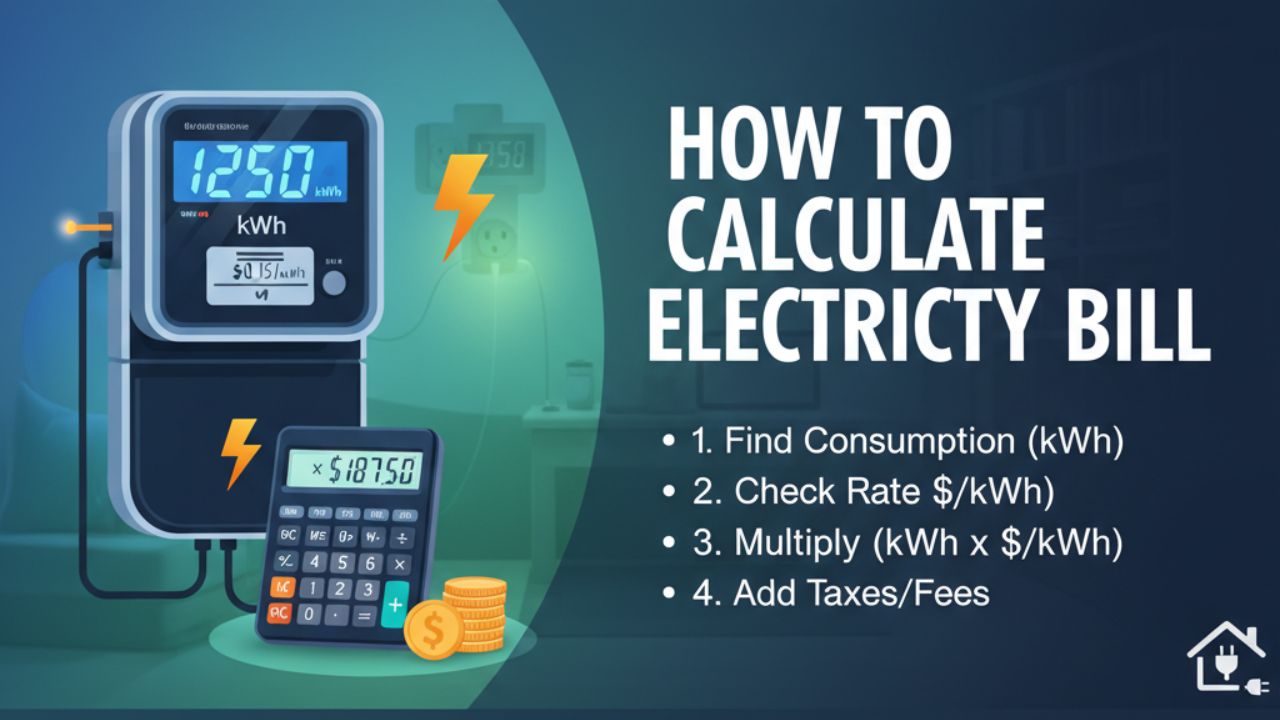
Ready for the fun part? The formula is: Total Bill = (Fixed Charges) + (Energy Charges) + (Taxes/Duties).
Break it down:
- Fixed Charges: Connected Load (kW) × Fixed Rate (₹/kW/month). Say 2 kW at ₹100/kW = ₹200.
- Energy Charges: Apply slabs to units.
- Fill lowest slab first, then next.
- Example for 250 units in Maharashtra (slabs: 0-100 @ ₹4, 101-300 @ ₹6.50):
- 100 × ₹4 = ₹400
- 150 × ₹6.50 = ₹975
- Total Energy = ₹1,375
- Taxes: (Fixed + Energy) × Tax Rate. At 15% duty + 18% GST? Add both.
Grand total: ₹200 + ₹1,375 + (₹1,575 × 0.15) + GST on that. Around ₹2,100—voila!
For bi-monthly (like TN): Double units, but slabs adjust.
Real-Life Example: Calculating a Delhi Household Bill
Let’s make it real. You’re in Delhi, 3 kW load, 180 units last month. Rates: Fixed ₹125/kW, slabs 0-200 @ ₹5.50 (simplified).
- Fixed: 3 × ₹125 = ₹375
- Energy: 180 × ₹5.50 = ₹990
- Duty (15%): (₹375 + ₹990) × 0.15 = ₹203.25
- GST (18% on total before GST): Say ₹1,568.25 × 0.18 ≈ ₹282
Total: ₹1,850-ish. Spot the savings? Cut to 150 units: Energy drops ₹165, total under ₹1,700.
Try it with your numbers—grab paper and pencil!
Why Slabs Matter: How They Sneak Up on Your Bill
Slabs are sneaky. That 101st unit? It costs more, pushing all excess into higher tiers. It’s “telescopic”—only extras pay premium.
- Benefit: Rewards low users (lifeline slabs often ₹0-3).
- Trap: Summer AC spikes? Bill doubles.
In 2025, states like UP added eco-slabs for EVs—bonus for green folks.
Online Tools: Skip the Math Headache
Who loves spreadsheets? Me neither. Use free calculators:
- State-Specific: TNEB for Tamil Nadu, KSEB for Kerala—input load/units, get instant breakdown.
- General Ones: Paytm or Bajaj Finserv apps scan bills via photo.
- Loom Solar’s Tool: State-wise, even predicts solar savings.
Just enter: Category, load, units. Boom—results with tips.
Common Mistakes That Inflate Your Bill (And How to Fix Them)
We’ve all been there. Dodge these:
- Wrong Units: Forgetting bi-monthly? Double-count.
- Ignoring Load: Added a fridge? Update with DISCOM to avoid penalties.
- Slab Blindness: Assume flat rate? Ouch—use apps to simulate.
- Tax Miss: Forget duty? Add 10-20% buffer.
Fix: Review bills quarterly. Apps like NoBroker flag errors.
5 Smart Ways to Lower Your Electricity Bill in 2025
Calculation’s half the battle—saving’s the win. With India’s push for efficiency, try these:
- Audit Appliances: Fridge? Old ones guzzle 200 units/year. Swap for 5-star: Save ₹500/month.
- LED Revolution: Bulbs to LEDs—cuts 80% lighting cost.
- Timer Tricks: Geyser on 30 mins? Timer it. Fans off when out.
- Solar Shift: Subsidies up to 40%—payback in 4 years. Check MNRE portal.
- Peak Avoidance: Evening TOU rates? Shift laundry to noon.
| Hack | Est. Monthly Save | Why It Works |
|---|---|---|
| Unplug Chargers | ₹50-100 | Vampire drain! |
| Ceiling Fan Clean | ₹100 | Efficiency boost |
| AC at 24°C | ₹200+ | Each degree saves 6% |
| Solar Panels | ₹1,000+ | Free power post-install |
I tried the AC tweak—dropped ₹300 in peak summer!
The Future of Billing: Smart Meters and Beyond
By 2025, 25 crore smart meters mean real-time tracking—no estimates. Apps show usage hourly, flagging leaks. Green tariffs? Pay premium for renewables.
Exciting? Yes. But learn basics now—tech can’t replace smarts.
When to Call Your DISCOM: Red Flags
Bill way off? Check for:
- Sudden jumps (faulty meter?).
- Wrong category (domestic vs. commercial).
- Unapplied subsidies (BPL free units?).
Helplines like 1912 are lifesavers. Document everything.
Frequently Asked Questions
Q: How do I find my connected load?
A: Check your bill or meter board—it’s in kW. Call DISCOM if unsure.
Q: Are electricity rates the same across India?
A: No, state-wise. Delhi’s cheaper than Maharashtra; use local calculators.
Q: What’s the average household bill in 2025?
A: ₹1,500-3,000 for 200-400 units, varying by state and season.
Conclusion
There you go, your no-fluff guide to “how to calculate electricity bill.” From meter reads to slab smarts, you’re now equipped to decode, predict, and prune that monthly monster. Next bill? Tackle it with confidence, maybe even spot a rebate. Small steps lead to big savings.
Disclaimer: This is a general guide based on 2025 averages; rates change, so verify with your DISCOM. Not financial advice—consult experts for specifics.