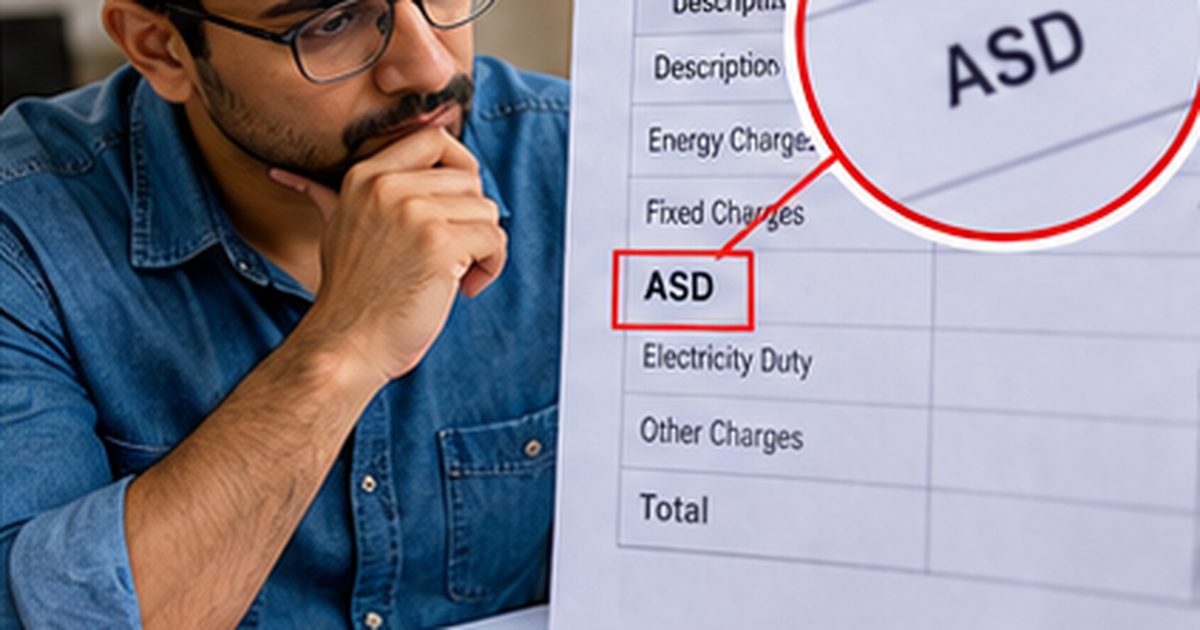
If you’re asking what is ASD in electricity bill, ASD usually means Additional Security Deposit. It is a request for extra deposit money when your electricity provider decides that the security already held on your account is below the amount required under its applicable rules. ASD is not the same as units of electricity consumed this month.
ASD is especially familiar to customers of utilities such as BESCOM in Karnataka, although other Indian distribution companies may use different labels for additional security. This guide explains why it appears, how to verify the calculation, and what you should do if the demand seems wrong.
What Is ASD in Electricity Bill?
A security deposit helps an electricity distribution company manage the risk of unpaid postpaid electricity charges. Customers may initially provide a deposit when a connection is activated. If the approved calculation of required security later exceeds the existing balance, the utility can seek the shortfall as an additional deposit, subject to its state regulations.
BESCOM’s official frequently asked questions define ASD as Additional Security Deposit under the Karnataka Electricity Regulatory Commission’s security-deposit regulations. MSEDCL’s consumer FAQ also explains why additional deposits can be requested. The exact method is not identical across states.
Why does an electricity company ask for ASD?
In a postpaid arrangement, electricity is consumed before the customer pays the bill. The deposit gives the provider some protection if the account goes unpaid. A higher recent bill pattern, different billing cycle, connection upgrade, or approved reassessment method can increase the amount of security considered necessary.
The provider should use the calculation method authorized for your tariff category and service area. Do not assume that an unexpected ASD line means you consumed extra units in the current month. It may reflect a reassessment of the amount held against the connection.
How does ASD differ from regular security deposit?
The original security deposit is the amount already held for the account. ASD is the additional amount requested when the required deposit exceeds that existing balance. A paid ASD should generally form part of the account’s security-deposit record under the provider’s rules, rather than becoming an energy charge.
Deposits and billing payments are recorded for different purposes. Ask your DISCOM how it credits deposit interest, handles reassessments, and refunds or transfers eligible balances. These issues depend on local regulations and the type of connection.
How is additional security deposit calculated?
There is no single nationwide ASD formula. Some regulatory frameworks use an average billing requirement over a defined number of months, then compare that requirement with the existing security amount. The applicable period, inclusions, rounding, exemptions, and minimum shortfall differ by regulator.
As an illustration only, suppose the rules require a security amount of ₹3,600 and the account already holds ₹2,800. The apparent shortfall is ₹800. That simple subtraction explains the idea, but it does not establish whether your actual provider may demand ₹800 under its approved regulations.
Check the required deposit, current deposit held, past bill amounts used in the calculation, and any prior ASD already paid. If the company’s demand ignores an earlier deposit receipt, ask for a written reconciliation before assuming the figure is correct.
What does BESCOM say about ASD?
Its published FAQ states that Karnataka’s relevant framework requires a maintained security deposit based on a defined number of months of specified charges, with different periods for monthly and bimonthly billing. It also describes notice and minimum-shortfall conditions. Those are specific to the cited Karnataka framework and should not be copied into another state’s bill calculation.
Check the current notice and any updated regulator order before relying on a quoted threshold or deadline. Rules can change, and different categories may be treated differently. The most useful evidence for your account is the official demand notice and the utility’s deposit ledger.
Does every household have to pay ASD every year?
Not necessarily. A utility may periodically review its security requirements, but a fresh demand depends on the account’s held deposit and the relevant calculation. If there is no shortfall requiring collection under the applicable rules, an additional amount may not be payable.
An annual review does not mean the provider can ask for an arbitrary annual fee. Distinguish an actual security-deposit demand from an energy surcharge, meter fee, or late-payment charge. If you have recently paid ASD, check that the deposit record has been updated.
Where is ASD shown on an electricity bill?
Depending on the DISCOM, ASD may be printed on the monthly bill, in a separate demand notice, or inside the consumer portal under Security Deposit. It might be accompanied by a due date, notice number, previous security balance, or deposit reference.
If the statement simply shows a combined payable figure, ask for itemization so you can separate the current electricity charges from the additional deposit. You can use an electricity bill calculator to estimate energy charges, but a calculator cannot know your actual deposit ledger.
How to check whether the ASD amount is correct
- Download the official ASD notice and current electricity statement.
- Find the deposit already held against your consumer number.
- Identify the relevant state security-deposit regulation and utility tariff category.
- Ask which billing months and charges were used to reassess security.
- Compare the assessed required deposit with the existing deposit and payments.
- Check the deadline, installment rules if any, and the official payment method.
- Report any unexplained difference through the provider’s billing-complaint process.
If you cannot see a clear calculation, request it in writing. Keep bills and older deposit receipts, particularly after property transfers, load revisions, or meter changes. A mere verbal statement that the amount is compulsory does not explain how it was computed for your account.
What happens if you do not pay ASD?
Nonpayment can have consequences under the applicable supply code and security-deposit rules, but deadlines, notices, and recovery methods vary. Avoid treating an official deposit demand as optional solely because it is not linked to this month’s units.
Equally, do not trust threatening calls or unofficial links claiming immediate disconnection. Read the actual written notice, verify its source with the utility, and use the official complaint procedure if you dispute the amount. Keep confirmation of any payment or pending grievance.
Does ASD earn interest or get refunded?
Deposit interest and refunds are governed by the applicable electricity law, state regulations, and specific conditions of the deposit. Some providers describe adjustments or refunds when the held security exceeds what is required. The way interest appears on your statement may differ from how annual ASD is displayed.
Ask the company for your complete security ledger: opening amount, additional deposits, interest credits, and any refunds or transfers. If you are closing or transferring the connection, ask who is entitled to any eligible deposit balance and what documents are required.
ASD versus arrears, fixed charges, and energy charges
Arrears are amounts carried from earlier billing periods. Energy charges reflect measured electricity consumption under the applicable tariff. Fixed or demand charges are tariff components, while ASD increases the security held for the connection. Read our demand charges explained article to distinguish capacity-related charges from deposits. These amounts have different explanations even when all appear on one statement.
An unpaid deposit demand may eventually appear as an outstanding item depending on the provider’s rules. That accounting treatment does not turn the original demand into new electricity consumption. See our guide to arrears and adjustments to interpret earlier balances.
How to raise a complaint about ASD
Use the DISCOM’s official service request, billing complaint, or deposit inquiry process. State your consumer number, notice date, demanded amount, amount already deposited, and the specific mismatch you found. Attach relevant receipts with unrelated sensitive information hidden.
Ask for a written calculation and reference to the applicable rule. If customer care does not resolve the issue, check the state Consumer Grievance Redressal Forum and Electricity Ombudsman procedures. Preserve acknowledgement numbers and correspondence.
FAQs About ASD in Electricity Bill
Q. Is ASD a tax on electricity?
A. No. ASD usually refers to additional money held as security, not a tax on consumption.
Q. Is ASD the same as my monthly electricity bill?
A. No. It is a separate deposit requirement that may be collected or displayed along with regular billed amounts.
Q. Can the provider ask for ASD more than once?
A. A subsequent reassessment may create a new shortfall under applicable rules. Check what has already been paid and credited.
Q. Can I challenge an incorrect ASD amount?
A. Yes. Ask for the deposit ledger and calculation and follow the provider’s formal grievance process.
Conclusion
Understanding what is ASD in electricity bill helps you distinguish a security-deposit request from ordinary energy charges. Review the notice, compare the deposit records, and verify the calculation using your state’s official rules.
Disclaimer
This article offers general educational information for India. Deposit formulas, notices, payment consequences, interest, and refund rules depend on state regulation, provider, and individual account circumstances. Confirm any demand with the DISCOM.